Finance
PG&E's Struggle: Balancing Affordability and Operational Costs
In a move that has left many customers concerned, Pacific Gas and Electric (PG&E) announced that its financial assistance program, REACH, has exhausted its funds for the remainder of the year. This comes just days after the utility company introduced another rate hike, further adding to the financial burden on its customers. As the company grapples with rising energy costs and the impact of extreme weather, the delicate balance between affordability and operational sustainability has come into sharp focus.Empowering Households: The Rise and Fall of PG&E's REACH Program
The Reach Program's Lifeline
The REACH program, designed to help customers break even with their PG&E bills, has been a crucial lifeline for many households struggling to make ends meet. However, the program's recent depletion of funds has left customers like Jennifer Godby in a precarious situation. Godby, who was in the process of applying for the program, found that the assistance had already run out, leaving her and her son, who relies on PG&E's medical baseline program for their asthma, facing bills that are hundreds of dollars each month.Shareholders' Intervention and Subsequent Exhaustion
According to PG&E spokesperson Jeff Smith, the company's shareholders recognized the program's depletion in June and promptly injected million back into it. However, this additional funding was quickly exhausted, a testament to the growing demand for financial assistance among PG&E customers. Smith attributed the rapid depletion to the high costs associated with the extensive heat waves experienced this summer, with temperatures reaching over 100-105 degrees for a record number of days.Customers' Frustration and Perceptions of PG&E
For customers like Godby, the loss of the REACH program, coupled with the recent rate hikes, has only exacerbated their financial struggles. Godby expressed her frustration, stating, "They're a big monopoly and they don't care about what they're doing to the little people." The perception of PG&E as a profit-driven entity, disregarding the impact on its customer base, has only fueled the growing discontent among its consumers.Addressing the Affordability Challenge
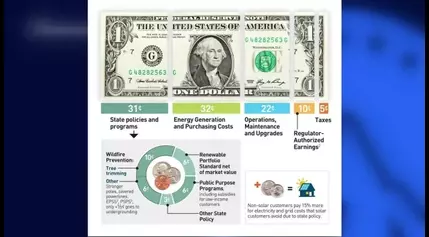
When asked about PG&E's consideration of customer impact during rate hikes, Smith defended the company's approach, stating that many customers are unaware of the actual cost breakdown of their energy bills. However, Godby's experience, where she is faced with the choice of buying groceries or paying her PG&E bill, highlights the very real financial challenges faced by households.Collaboration and Compromise: Seeking Solutions
In response to the growing concerns, California Governor Gavin Newsom acknowledged the need for action, stating that there are packages in the works to address the issue. The delicate balance between PG&E's operational costs and customer affordability will require a collaborative effort, involving the utility company, policymakers, and the community, to find sustainable solutions that prioritize the well-being of both the company and its customers.Weathering the Storm: PG&E's Adaptation Strategies
As the company grapples with the rising energy costs and the impact of extreme weather events, PG&E must explore innovative strategies to maintain its operational viability while ensuring its services remain accessible and affordable for its customers. This may involve exploring alternative energy sources, implementing energy-efficient technologies, and implementing more targeted and effective financial assistance programs to support those most in need.Restoring Trust: Rebuilding the PG&E-Customer Relationship
Ultimately, the resolution to this complex issue will require a multifaceted approach that addresses the root causes of the affordability challenge, while also rebuilding the trust between PG&E and its customers. By demonstrating a genuine commitment to customer well-being, embracing transparency, and collaborating with stakeholders, PG&E can navigate this challenging landscape and emerge as a utility that prioritizes the needs of its community.